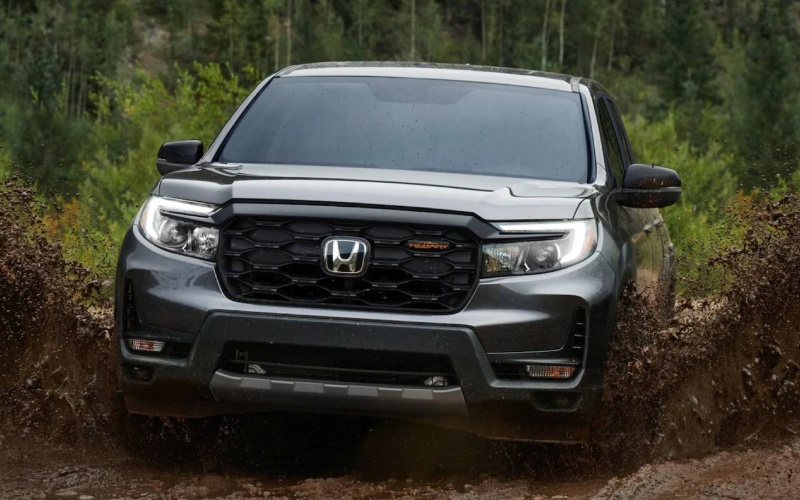
McGrath Honda Of St. Charles - Which midsize pickup is easier to live with around Geneva, IL - 2026 Honda Ridgeline or 2026 Ford Ranger?
Many midsize truck shoppers start with a familiar question: should daily comfort or maximum traditional truck capability matter more? The answer depends on how the pickup will be used, but for a large number of local drivers, the Honda Ridgeline is easier to live with day after day than the Ford Ranger. The Ranger offers serious available towing strength, available 4x4 capability, and a performance-focused Ranger Raptor® model, so it certainly has appeal for buyers who prioritize a more conventional body-on-frame truck feel. However, the Ridgeline is designed around a different kind of usefulness. It combines standard i-VTM4® AWD, a standard 280-horsepower V-6 engine, a smooth 9-speed automatic transmission, a versatile cabin, and standout cargo solutions that simplify daily routines.
That balance matters for drivers serving Geneva, Batavia, and Elgin who may need one vehicle for commuting, family use, home improvement runs, youth sports, towing smaller recreational equipment, and occasional gravel-road travel. The Ridgeline does not try to be the most extreme truck in every single category. Instead, it aims to be the truck that feels most natural and convenient during the majority of real-world drives. At McGrath Honda Of St. Charles, we often recommend it to shoppers who want pickup utility but do not want the stiffness, noise, or compromises sometimes associated with traditional truck platforms.
Why the Ridgeline feels more refined in everyday driving
The Ridgeline uses unibody construction, which helps provide a smoother and quieter ride compared with many conventional pickups. Honda notes that this structure is stronger than conventional body-on-frame designs and helps improve isolation from wind noise and vibration. For the driver, that translates into a truck that feels composed on suburban roads, comfortable on highways, and easy to manage during stop-and-go traffic. The fully independent front and rear suspension further supports ride comfort, helping the Ridgeline absorb rough pavement, expansion joints, and uneven neighborhood streets with confidence.
The Ford Ranger has a more traditional truck personality. That can be appealing for shoppers who prefer a classic pickup feel, and its available FX4® Off-Road Package and Ranger Raptor® model add serious trail-oriented hardware. Yet for many people asking which midsize truck is easier to live with, the Ridgeline’s refined road manners are a major advantage. It feels less like a vehicle that must be tolerated during the week in exchange for weekend utility and more like a comfortable daily driver that also happens to have an exceptionally useful bed.
How do the cargo features compare?
This is where the Ridgeline separates itself in a way shoppers can understand immediately. The Dual-Action Tailgate opens down like a normal tailgate or swings open to the side, making it easier to reach items near the front of the bed or access the lockable In-Bed Trunk®. That trunk offers 7.3 cubic feet of secure, hidden storage and includes a drain plug, so it can handle wet gear or function as an ice chest. For groceries, tools, sports bags, camping supplies, or items owners would rather keep out of sight, this feature is one of the most practical advantages in the midsize truck class.
The Ridgeline bed is also designed with minimal wheelwell housings, allowing it to carry 4-by-8-foot sheets of plywood flat. The standard composite, UV-stabilized, scratch-resistant truck bed helps resist dings and scrapes, which is helpful when hauling materials or outdoor equipment. The Ranger offers a useful bed with 43.5 cubic feet of bed volume, plus available features such as Pro Power Onboard™ and an integrated box side step. Even so, the Honda bed setup is uniquely versatile because it solves several common problems at once: access, hidden storage, durability, and wide-item hauling.
- Dual-Action Tailgate: Opens down or to the side for easier loading and access.
- Lockable In-Bed Trunk®: Adds secure storage without taking up cabin space.
- Composite truck bed: Helps protect the bed surface from scrapes and dents.
- Lay-flat design: Supports 4-by-8-foot sheet hauling more conveniently.
Which truck is better for passengers and technology?
The Ridgeline cabin has a clear advantage for shoppers who value passenger comfort. Its roomy interior, seating for up to five, and 60/40 split lift-up rear seats create flexible space for people and cargo. If the bed is full or the weather makes open-bed storage less convenient, the rear seat area can quickly adapt for bags, gear, tools, or fragile items. Available leather-trimmed seats, a leather-wrapped steering wheel, heated front seats, a one-touch power moonroof, and a wireless phone charger help the Ridgeline feel more premium on select trims.
Technology is also straightforward. The 9-inch Display Audio touch-screen supports touch, pinch, and swipe functions, while wireless Apple CarPlay® compatibility and wireless Android Auto™ compatibility make smartphone integration simple. Available Honda Satellite-Linked Navigation System™ can add guidance with 3-D renderings of terrain, buildings, and road signs, as well as lane guidance. The Ranger answers with available SYNC® 4A with Enhanced Voice Recognition, an available 12-inch center display, and an available 12-inch cluster display, so technology fans may appreciate its screen options. Still, the Ridgeline’s cabin layout feels especially well-suited to drivers who prioritize comfort, simple controls, and everyday flexibility.
What about performance and traction?
The Ridgeline keeps the powertrain lineup refreshingly simple. Every model includes a 3.5-liter V-6 engine producing 280 horsepower and 262 pound-feet of torque, along with a 9-speed automatic transmission. It can tow up to 5,000 pounds and includes a standard integrated tow hitch with a 7-pin connector. The standard i-VTM4® AWD system works with Intelligent Traction Management, offering Normal, Snow, Sand, and Mud modes. That standard traction technology is helpful for drivers who want confidence without sorting through drivetrain options.
The Ranger offers more engine variety, beginning with a 2.3L EcoBoost® engine and adding available V-6 choices, including the powerful 3.0L EcoBoost® V6 in the Ranger Raptor®. It also offers a higher maximum available towing rating when properly equipped. For shoppers whose top priority is the highest available tow rating in this comparison, the Ranger deserves consideration. For shoppers who want standard V-6 power, standard all-wheel drive, smooth road manners, and useful towing capability in one easy-to-understand package, the Ridgeline is the stronger everyday recommendation.
- Choose the Ridgeline if daily comfort, standard AWD, and clever cargo storage matter most.
- Consider the Ranger if maximum available towing or specialized off-road performance is the main priority.
- Test drive the Ridgeline if you want a pickup that feels refined, flexible, and easy to use from the start.
Safety and driver-assist confidence
The Ridgeline also brings a strong safety story with the standard Honda Sensing® suite. Collision Mitigation Braking System™ (CMBS™), Road Departure Mitigation System (RDM), Adaptive Cruise Control (ACC), and Lane Keeping Assist System (LKAS) are designed to assist the driver through alerts and, when appropriate, braking or steering support. A standard rearview camera with dynamic guidelines provides wide, normal, and top-down views, which can help when backing into a parking spot or lining up with a trailer hitch.
Available blind spot information system (BSI) with cross traffic monitor adds another layer of confidence on select Ridgeline trims. The Ranger offers available Ford Co-Pilot360® Technology with tools such as available BLIS® with Cross-Traffic Alert and Trailer Coverage, which can be helpful when towing. The difference is that Honda makes its core safety suite standard, reinforcing the Ridgeline’s appeal as a well-rounded truck that does not require shoppers to chase basic confidence features through the option list.
Frequently Asked Questions:
Is the Honda Ridgeline better than the Ford Ranger for daily commuting?
For many drivers, yes. The Ridgeline’s unibody construction, fully independent suspension, standard i-VTM4® AWD, and comfortable cabin make it especially easy to drive every day. The Ranger has strong truck capability, but the Ridgeline generally feels smoother and more refined in routine driving.
Can the Ridgeline still handle truck tasks?
Yes. The Ridgeline can tow up to 5,000 pounds, has a standard integrated tow hitch with a 7-pin connector, and includes a durable composite truck bed. Its Dual-Action Tailgate, lockable In-Bed Trunk®, and ability to carry 4-by-8-foot sheets flat add practical advantages for common hauling needs.
Which truck has the more versatile bed?
The Ridgeline has the edge for everyday versatility. The Ranger bed is useful and offers available features such as Pro Power Onboard™, but the Ridgeline’s combination of a Dual-Action Tailgate, lockable In-Bed Trunk®, and lay-flat bed design gives owners more flexible ways to load, secure, and organize cargo.
Why should I test drive the Ridgeline before choosing?
A test drive highlights the Ridgeline’s biggest advantage: how naturally it blends pickup utility with passenger comfort. Specs matter, but the smoother ride, smart storage, quiet cabin, and standard V-6 power are easiest to appreciate from behind the wheel.